
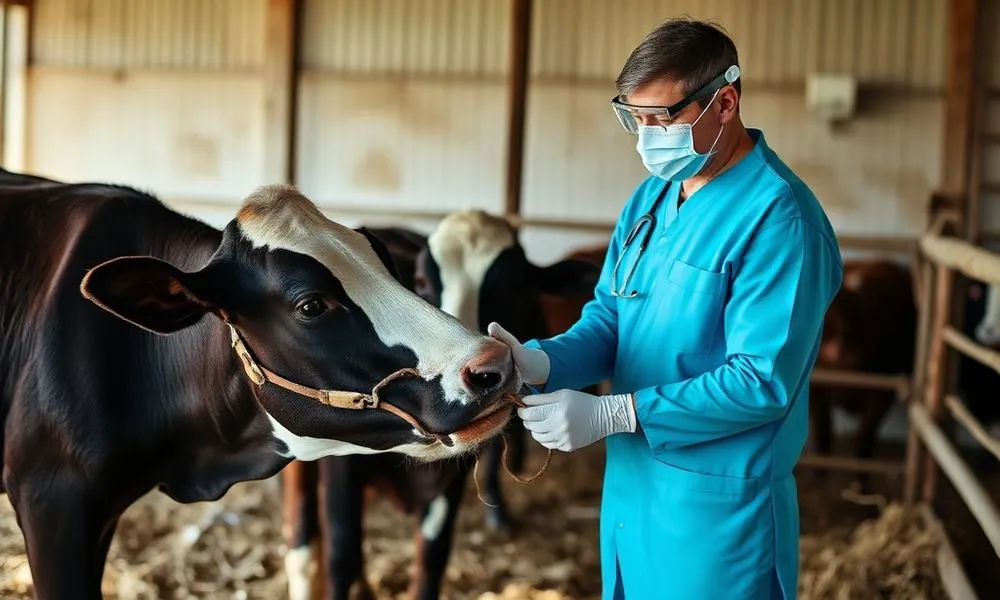
Formulated and reviewed by our veterinary panel.
Why deworming matters
Internal parasites are one of the most common and most expensive hidden problems on dairy and fattening farms. Roundworms, liver flukes and tapeworms compete with the animal for nutrients, damage the gut lining and liver, and quietly reduce milk yield, growth and fertility. Many heavily affected animals do not look seriously ill. They simply eat well but stay thin, produce less milk than expected and take longer to come back into heat after calving.
A planned deworming routine, timed to the seasons and supported by good grazing and hygiene, prevents worm numbers from building up in the first place. It is far cheaper than losing production for months.
Signs of a worm burden
- Rough, dull coat and loss of body condition despite good feeding
- Pot-belly appearance, especially in calves and young stock
- Loose dung or diarrhoea, sometimes with a soiled tail
- Pale gums and inner eyelids, a sign of blood loss
- Swelling under the jaw (bottle jaw), often linked with liver fluke
- Falling milk yield or slow weight gain with no other clear cause
If you see several of these signs, ask your veterinarian about a dung test. It shows which parasites are present and helps you choose the right product and timing.
Spring (February to April)
As temperatures rise, worm eggs on pasture start hatching quickly. Deworm all adult animals and young stock at the start of the season, before they go out onto green fodder or grazing. This removes worms that survived the winter and reduces the number of eggs passed onto the land. Weigh or estimate body weight carefully, because under-dosing is one of the main reasons treatments fail.
Pre-monsoon and monsoon (June to September)
Warm, wet conditions are ideal for worms and for the snails that carry liver fluke. Animals grazing near canals, ponds or waterlogged fields are at highest risk. Give a second round of deworming just before or early in the monsoon, and consider a follow-up six to eight weeks later for young stock and animals on wet ground. Keep calves away from muddy, heavily used areas wherever possible.
Autumn (October to November)
After the rains, many animals carry the heaviest burdens of the year, including immature liver fluke. Deworming at this stage protects animals going into winter and helps pregnant animals hold condition before calving. Discuss fluke control specifically with your veterinarian if your area has a history of bottle jaw or condemned livers.
Winter (December to January)
Worm activity on pasture slows down in cold weather, but animals kept indoors on stall feeding can still carry worms. Treat any animal that is losing condition, and deworm newly purchased animals on arrival before mixing them with the herd. Winter is also a good time to plan the year's calendar and order stock in advance.
Special groups
- Calves: start at around two to three months of age and repeat as advised on the label; they are the most vulnerable
- Pregnant animals: use only products and doses that are labelled as suitable, and ask your veterinarian if unsure
- Newly bought animals: deworm and keep separate for two to three weeks before mixing
- Animals in milk: always follow any milk withdrawal guidance on the product
Tips that make each dose count
- Dose by weight, not by guess; dose the heaviest animal in a group correctly rather than averaging
- Do not overcrowd animals on the same small grazing area
- Clean sheds regularly and remove dung from feeding and watering areas
- Provide clean drinking water rather than stagnant ponds
- Keep a simple written record of date, product and dose for every animal
- Rotate product types only on veterinary advice to reduce the risk of resistance
Where our products fit
KM Pharmaceutical offers homoeo deworming formulations such as CinaZole and Deworming Plus Elixir, made in our licensed Khanewal facility and batch-tested. They are designed to support a planned deworming programme alongside good management. Browse the full deworming range or message us on WhatsApp if you would like help choosing a pack size for your herd.