
Formulated and reviewed by our veterinary panel.
What biosecurity means
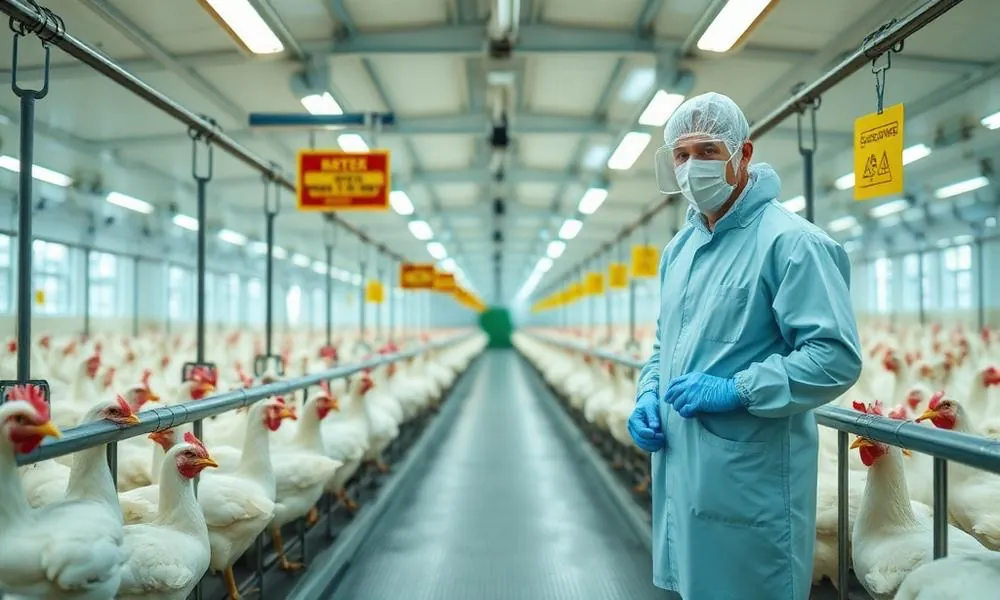
Biosecurity simply means keeping disease out of your farm and stopping it from spreading if it does get in. Poultry diseases such as Newcastle disease, avian influenza, infectious bronchitis and coccidiosis can move through a shed very quickly and cause heavy losses. Most of these diseases arrive on people, vehicles, equipment, wild birds, rodents or new birds.
Good biosecurity does not need to be expensive. A few consistent daily habits protect your birds better than any treatment after an outbreak.
1. Control who and what comes in
- Keep one main entrance and lock or block other routes
- Keep a visitor record with date, name and the last farm they visited
- Only allow essential visitors into sheds
- Provide dedicated boots and overalls for each shed, or at least for the farm
- Keep vehicles outside the bird area where possible; disinfect wheels if they must enter
2. Footbaths and hand washing
Place a footbath with a suitable disinfectant at the entrance of every shed and change the solution regularly, because dirt and droppings quickly make it ineffective. Scrape boots before stepping in. Provide soap and water for hand washing before and after handling birds. These two habits alone stop a large share of disease spread between sheds.
3. All-in, all-out and clean-out
Wherever possible, place birds of a single age in a shed and remove them all at the end of the cycle. After the flock leaves, remove all litter, clean the shed and equipment thoroughly, disinfect, and leave the shed empty for a rest period before the next flock. Mixing ages lets disease pass from older birds to young chicks.
4. Keep wild birds, rodents and pests out
- Use netting on windows and openings to keep wild birds out
- Store feed in closed, dry containers away from walls
- Clean up spilled feed promptly
- Run a regular rodent control programme around sheds and stores
- Control flies and beetles in litter
5. Water, feed and litter
Clean drinking water is essential. Flush drinker lines between flocks and clean drinkers often. Buy feed from reliable sources and store it properly so it does not become damp or mouldy. Keep litter dry; wet litter around drinkers encourages coccidiosis and ammonia, which damages the birds' airways. Good ventilation helps keep litter dry and air quality healthy.
6. New birds and sick birds
- Buy chicks only from reputable hatcheries with a clear vaccination history
- Keep any new or returning birds separate before mixing
- Remove dead birds from sheds at least twice a day and dispose of them safely by burial or burning, away from sheds
- Isolate sick birds and note the signs, numbers and dates
Make it a habit for everyone
Biosecurity only works when every person on the farm follows it every day, including family members, labourers, feed suppliers and visitors. Explain the rules clearly, put simple signs at the gate and shed doors, and check footbaths and records as part of the daily routine. A written one-page plan, kept somewhere visible, helps new workers follow the same steps from their first day.
7. Vaccination and veterinary advice
Biosecurity and vaccination work together. Follow a vaccination programme planned with your veterinarian for your area and type of production, and store vaccines correctly. Keep simple daily records of feed and water intake, mortality and egg production. A sudden rise in deaths, a drop in water intake or a fall in egg production is often the first sign of trouble.
Some poultry diseases, including avian influenza, are notifiable. If you see sudden heavy deaths, swollen heads, breathing problems or a sharp fall in production, contact a veterinarian or your local livestock department immediately.
Where our products fit
Our all-species formulations support general poultry health alongside biosecurity and vaccination. They are made in our licensed Khanewal facility and batch-tested. Browse the poultry range or message us on WhatsApp if you would like help planning stock for your next flock.