Formulated and reviewed by our veterinary panel.
Why summer hits dairy animals so hard
High-producing dairy cattle and buffalo generate a large amount of body heat simply by digesting feed and making milk. When the air around them is hot and humid, they cannot lose that heat fast enough. Buffalo are particularly sensitive because they have dark skin and relatively few sweat glands, which is why they seek water and mud so eagerly in summer.
In much of Pakistan, temperatures from May to August regularly reach levels where animals are under stress for most of the day. The result is lower feed intake, lower milk yield and butter fat, weaker heat signs, poor conception and, in severe cases, collapse.
Know the warning signs
- Fast, shallow breathing and panting, sometimes with the mouth open
- Drooling, standing for long periods and crowding around water or shade
- Reduced feed intake, especially of dry fodder and concentrate
- A sudden drop in milk yield or butter fat
- Restlessness, weakness or reluctance to move
- Weak or missed heats and repeat breeding
Open-mouth breathing with the tongue out, staggering or collapse is an emergency. Move the animal to shade, wet it with cool water and call a veterinarian immediately.
Step 1: Shade and airflow
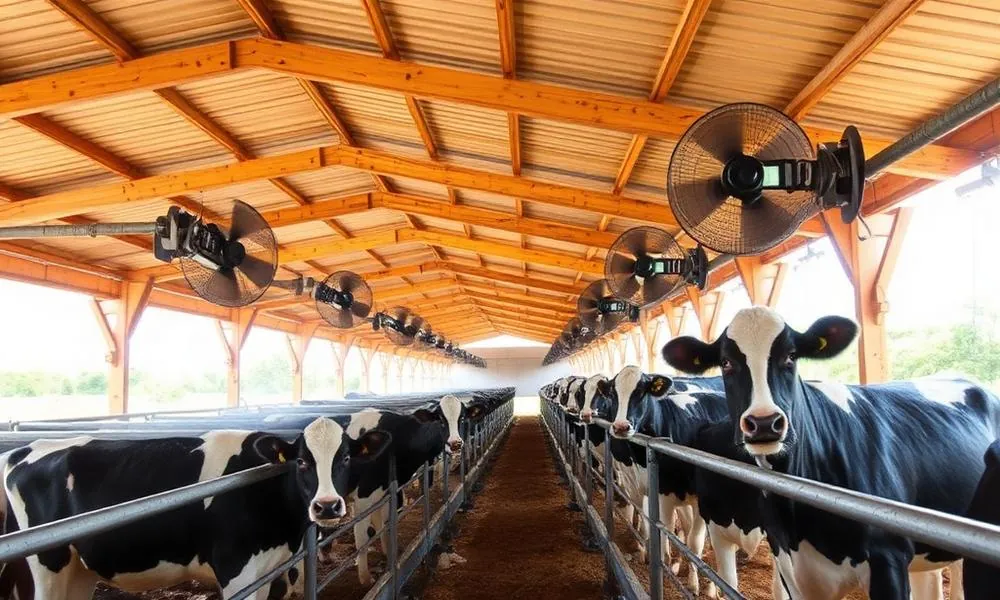
Shade is the single most important tool. A well-ventilated shed with a high roof, or a thatched or sheet shade in the open, reduces the heat load from direct sun dramatically. Make sure air can move freely through the shed; remove unnecessary walls or obstructions and use fans where electricity allows. Avoid overcrowding, because each animal adds heat to the space.
Step 2: Water, and plenty of it
A milking animal can drink far more water in summer than in winter. Provide clean, cool water at all times, in troughs that are shaded and large enough for several animals to drink at once. Clean troughs regularly. Sprinkling or showering animals with water several times a day, followed by fanning, helps them lose heat quickly. Buffalo benefit greatly from access to a clean wallow or a shower.
Step 3: Change the feeding routine
- Feed the main meals early in the morning and in the evening, when it is cooler
- Offer good-quality green fodder, which is more appealing and contains water
- Avoid sudden changes in ration; make any changes gradually over several days
- Ensure minerals and salt are always available, as animals lose salts through sweating and drooling
- Do not leave feed to spoil in the heat; remove leftovers daily
Step 4: Handle and move animals carefully
Plan milking, treatment, loading and transport for the coolest part of the day. Avoid walking animals long distances in the afternoon sun. Watch newly calved animals, high yielders and heavily pregnant animals closely, as they are at highest risk.
Step 5: Support recovery
Even with good management, many animals will go off feed or lose yield during heat waves. Supportive formulations can help animals recover appetite and condition alongside the steps above. Keep a close eye on fertility during and after summer, and discuss any repeat breeders with your veterinarian.
A simple daily checklist
- Morning: check water troughs, feed early, look for panting or animals off feed
- Midday: sprinkle or shower animals, check fans and shade, top up water
- Evening: feed the second main meal, check milk yield and note any drops
- Weekly: clean troughs and sheds, review records and plan any veterinary visits
Where our products fit
KM Cool is our homoeo formulation for heat-stress recovery, and our feed supplements support appetite during and after hot spells. They are made in our licensed Khanewal facility, batch-tested, and formulated and reviewed by our veterinary panel. See the heat stress range, or message us on WhatsApp for advice on what to keep in stock before summer.